How bogs kill moose
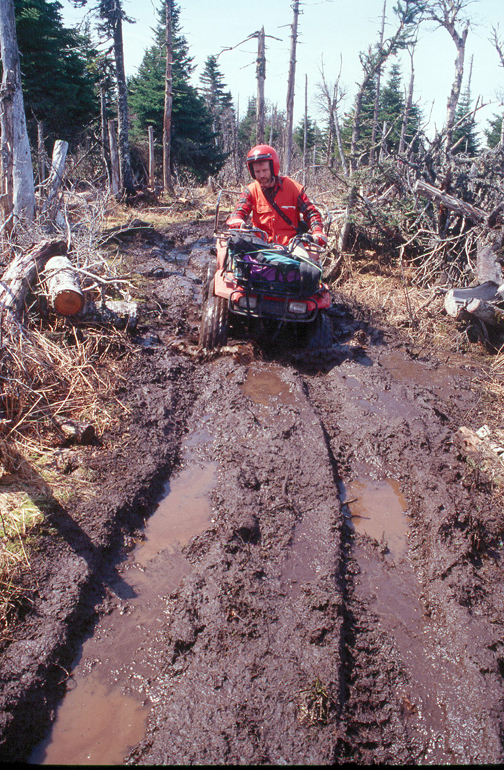
Bear sign was plentiful as the three of us struggled, slashed, and made our way through thick alder, spruce and swampy areas deep within the plateau of the Cape Breton Highlands. “That tells us we’re near the bogs we are looking for” noted Tony Nette of NS Dept of Natural Resources. “The bogs are ones...
Tiam update
Issues of moose management have been discussed amongst community members at sessions in practically all Mi’kmaq communities in Nova Scotia. Sessions with Indianbrook, Glooscap, and Wagmatcook are planned. “Information from these sessions are duly noted” Coordinator Clifford Paul explains, “The ability to successfully facilitate discussions on Mi’kmaq moose management shows that Mi’kmaq people take their...
Moose Management Initiative – Update
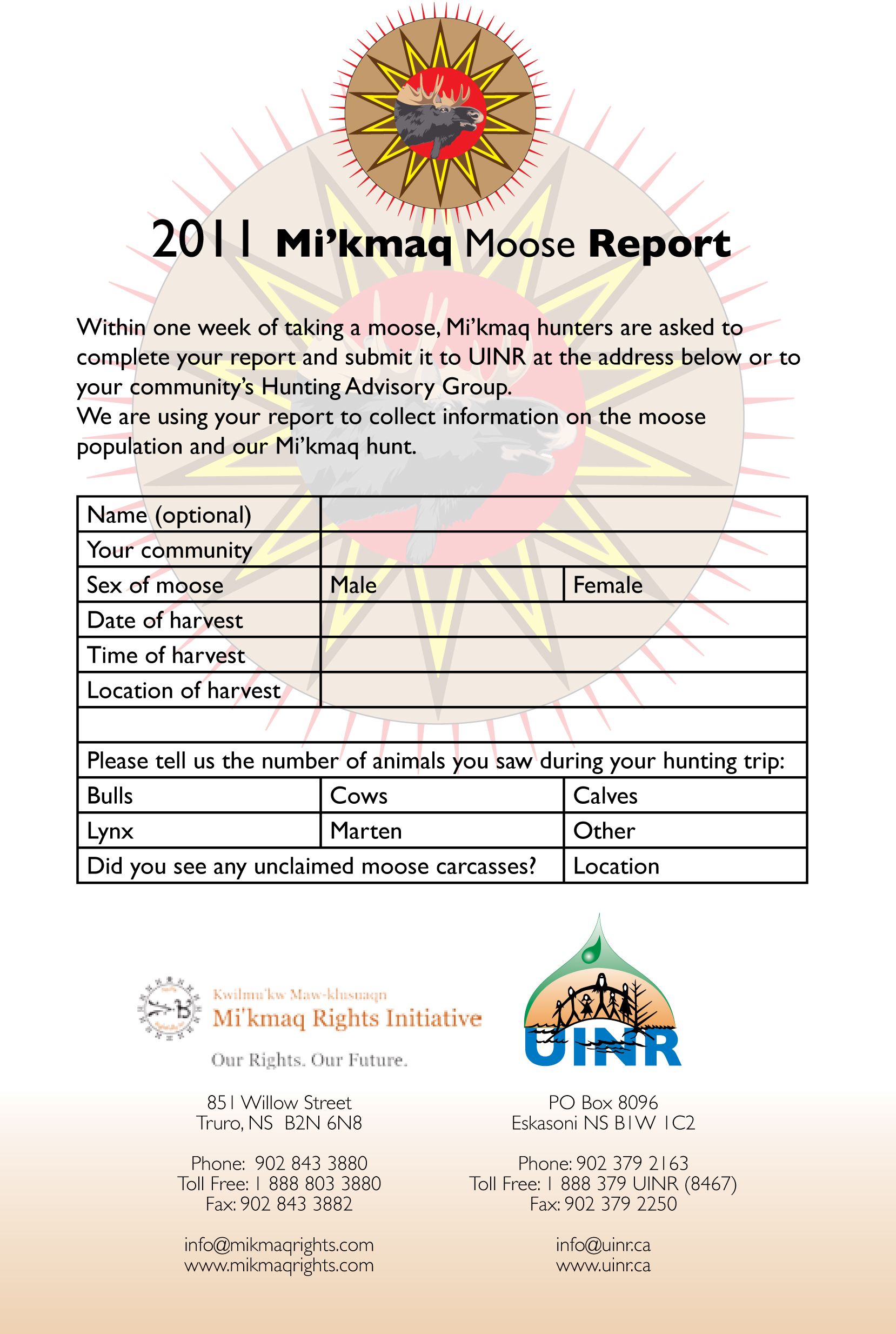
Increased presence in the highlands Hunters can expect to see an increased presence of Mi’kmaq Natural Resource Officers (NRO’s) and officials from the Nova Scotia Department of Natural Resources (DNR) in the Cape Breton Highlands this Fall. This is an effort for the Mi’kmaq to take increased control of the Mi’kmaq moose hunt. “Members of...
Clifford Paul, UINR Moose Management Initiative Coordinator
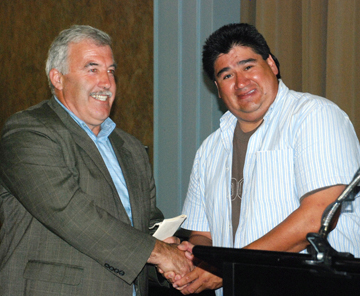
Welcome readers of the UINR Marten to the moose section of our newsletter. I am pleased to let you know that progress is underway in the Moose Management Initiative. A series of meetings with Mi’kmaq communities and their Chief and Councils are planned over the next several months. To facilitate community involvement in this initiative,...
Moose Management Initiative
UINR has taken on the responsibility of creating a moose management plan. UINR, representing the five Mi’kmaq communities of Unama’ki, is mandated to implement this plan with the support of the Mi’kmaq Grand Council and the Unama’ki Council of Elders. Further development and long-term acceptance of this initiative is supported by Mi’kmaq leadership and by...
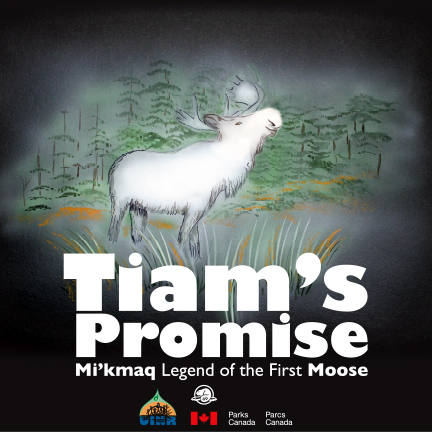
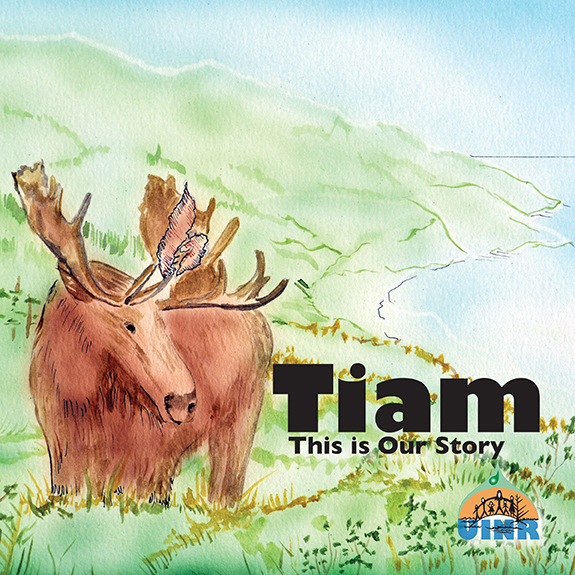
Tiam and Me
by Jackie Drinnan When I was eight years old, my grandmother Ellen Simon and I were picking blueberries in a field in Wagmatcook, near where the school is today. We were always out picking something, whether it was berries or medicine for the family. We were always together and she always taught me something new...
Moose Facts
 The word moose comes from the Algonquin Indians“ mooswa meaning “twig-eater” or “the animal that strips bark off of trees.” Through the years, it eventually changed into “moose.” For Mi’kmaq people the moose is an important animal. supplying us with food and other things for our survival. Moose meat is a source of nourishment...
Moose Camp
UINR is hosting a Youth Moose Camp in which four youth from the five Unama’ki Mi’kmaq communities will be selected to experience a tradition that has been with our people for generations. Participants will go through four days of workshops, participate in a community hunt and host a supper celebration for their community’s elders. For...
Managing Moose
The current moose population in Inverness and Victoria Counties is estimated at a healthy 5,000 with a possible high of 7,000 moose. A project using radio collars that emit signals back to researchers allow the tracking of moose to determine their population, migration patterns and the general movement of the moose population. This research project...